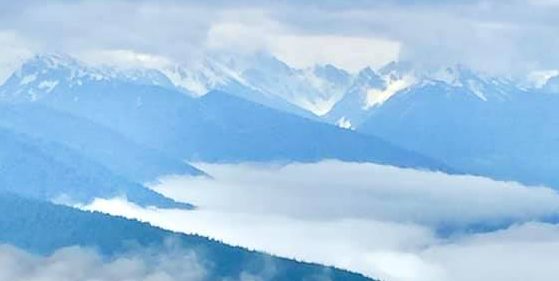
Mount Rainier National Park Information Page

Welcome to the Mount Rainier National Park Information Page.
Here you will find all you need to know about the natural history of the park.
Learn about the geology, trees, mammals, birds, or other plants and wildlife of the area.

-SPONSORED LINKS-
Mount Rainier Lodging
Mount Rainier Maps
Mount Rainier Hotels
Mount Rainier Camping
Mount Rainier Tours
Mount Rainier Vacations 
Mount Rainier Weather
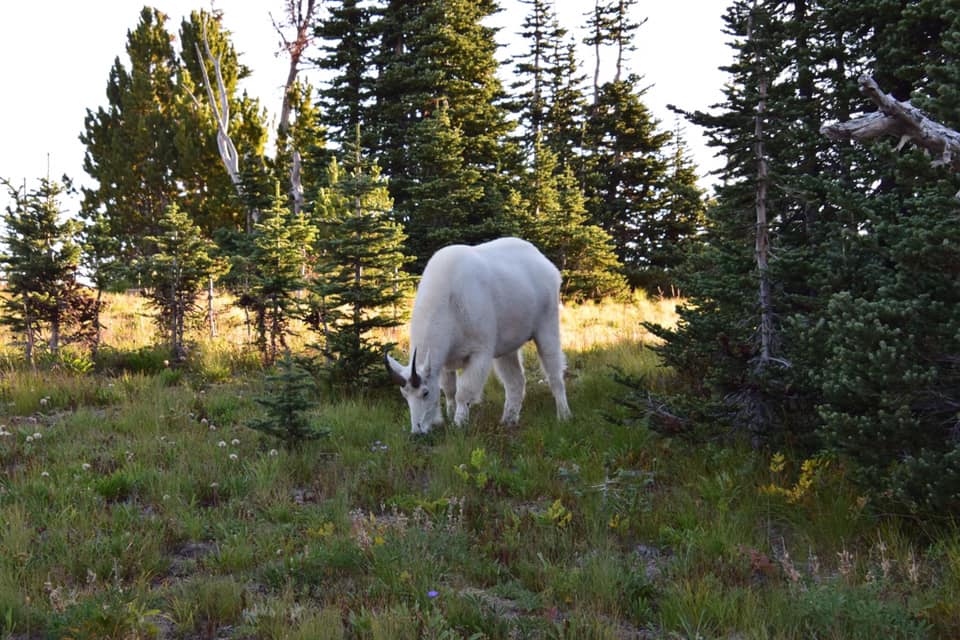
Mountain Goat - Corel ©

Sponsored National Park Search

Mountain Goat - Corel ©

Mount Rainier National Park Information
  • Amphibians & Reptiles
  • Archeology
  • Establishment
  • Flowers
  • Glaciers
  • Mammals
  • Size and Visitation
  • Trees
  • Volcanic Mount Rainier

  • 
    

    Establishment

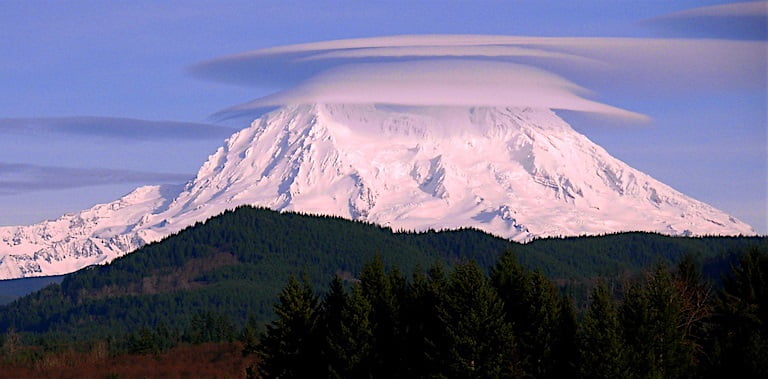
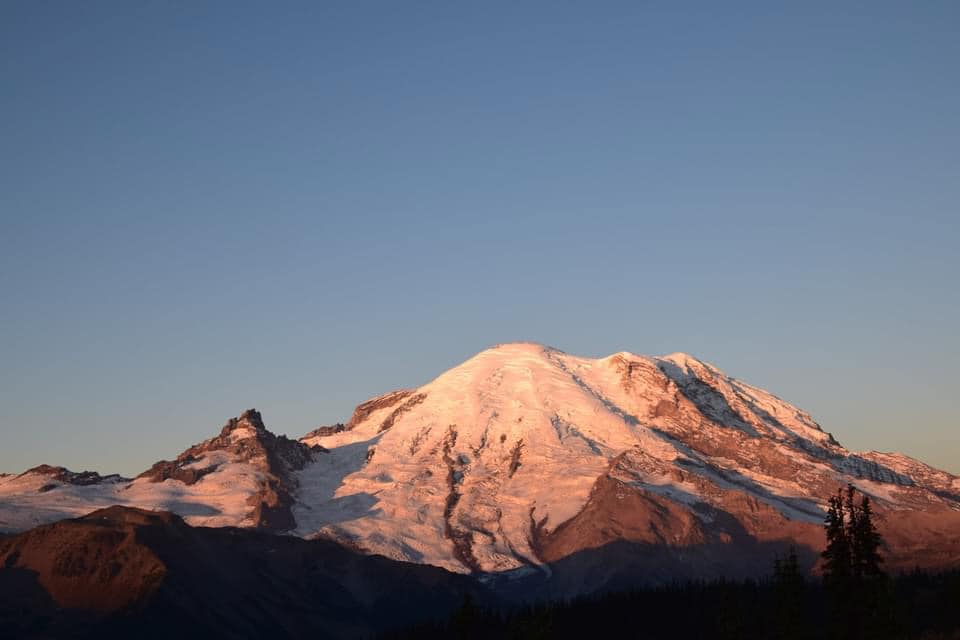
    Mount Rainier established on 02 March 1899, contains vast expanses of pristine old-growth forests, subalpine flower meadows, spectacular alpine scenery, and great opportunity for stimulating outdoor activities. Mount Rainier National Park is the fifth oldest national park in the United States. The park has the greatest single-peak glacial system in the United States. Glaciers radiate from the summit and slopes of the 14,411 foot volcano.

    The first recorded view of Mount Rainier was made by Captain George Vancouver, a British explorer, while mapping Puget Sound in 1792. He named it after his friend Peter Rainier. The Indians called it Takhoma and had many legends about it.

    In 1833, William Fraser Tolmie, became the first white man to enter what is now Mount Rainier after Tolmie's search for some medicinal herbs while working at Fort Nisqually.

    In 1857, a well documented attempt to climb Mount Rainier was made by an Army lieutenant, August Valentine Kautz. He was stationed at Fort Steilacoom and had the mountain practically in his backyard. He developed a great desire to reach it's summit and with some companions hired a Nisqually Indian as their guide and headed for the foot of the Nisqually Glacier in July. After 6 days of traveling through forest and thicket, they finally began their climb up toward the summit. By the eighth day, Wahpowety the Nisqually guide, was suffering from snow blindness. His companions gave out as well, but Kautz went forward and continued until he reached what was probably the 14,000 feet level. He was about 400 feet shy of the summit. It was a great disappointment, however he proved that legends of Indians climbing Mount Rainier could be true. Mount Rainier could be climbed.

    Settlements continued to spread across the seacoast, and so did the notoriety of the Northwest's greatest mountain. The US naval squadron mapping the area, used Mount Rainier as a landmark and giving it the altitude of 12,330 feet. Today it is considered to be 14,411 feet.

    Two years after Kautz's attempt, James Longmire, a settler from Indiana, established a route from the coast to the inclines of Mount Rainier. It was known as the Packwood Trail, with Longmire as it's guide. Eleven years later, Longmire guided three men to the end of Packwood Trail. Their aim, to climb Mount Rainier.

    Hazard Stevens, Philemon Van Trump and Edmond T. Coleman hired a Yakima Indian named Sluiskin to be their guide. Coleman drooped out but the others went on. They reached their goal on 17 Aug 1870 after 10 and one half hours of climbing. They left a brass nameplate and a canteen on the summit to document the first successful ascent recorded. After them, climbers have come from all over to test themselves against the mountain.

    In 1883, Longmire, at the age of 63, finally decided to face his own challenge with the Mountain. On the way up, he camped near several soda and iron springs. Longmire established Mount Rainier's first hotel at that sight. Touting the value of the spring water and mineral water baths as a medical cure-all, his advertisements reached far and wide. Many came to be cured and found the peaceful scenery and surroundings just as wonderful.

    John Muir, a conservationist, came in 1888 and rented horses to climb the mountain. That wasn't his original plan, but after he saw the mountain, he got too excited and found himself upon the summit in the company of photographer Arthur C. Warner. With the writings of Muir and the pictures of Warner, the American people became familiar with the grandeur of Mount Rainier.

    More people came to climb the mountain. In 1890, Fay Fuller became the first woman to climb Mount Rainier. The interest of climbing the mountain, enjoying the scenery and waters continued to grow. The culmination of this increasing interest came on 02 March 1899, when President McKinley signed the act establishment of Mount Rainier National Park, the nation's fifth national park.

    People continued to come and visit this beautiful, peaceful, challenging mountain. As the railroad, roads, and vehicle sightseeing became better and more efficient, and made it easier to visit Mount Rainier National Park, more people came. There are now over two million visitors annually.


    Size and Visitation

    The park encompasses 378 square miles (980 square kilometers, 235,612.5 acres). Elevation ranges from 1,880 at the Carbon River rain forest (NW corner of park) to 14,411 feet at the summit. Annual visitation exceeds 2 million visitors, with the majority of visitors coming to the park during the months of May through October.


    Mount Rainier - the Volcano

    Mount Rainier is an episodically active volcano. The volcano began to grow between one half and one million years ago. The slopes of lava flows on opposite sides of the mountain probably projected more than 1,000 feet above the present summit. The upper portion of the cone was likely removed by explosions and landslides. The current summit, Columbia Crest, lies at 14,411 feet above sea level, on the rim of the recent lava cone.

    Mount Rainier, the highest (4392 m) volcano in the Cascade Range, towers over a population of more than 2.5 million in the Seattle Tacoma metropolitan area, and its drainage system via the Columbia River potentially impacts another 500,000 residents of southwestern Washington and northwestern Oregon. Mount Rainier is the most hazardous volcano in the Cascades in terms of its potential for magma water interaction and sector collapse, and major eruptions or debris flows even without eruption. It poses significant dangers and economic threats to the region but despite such hazards and risk, Mount Rainier has received little study.

    In 1989 the International Association of Volcanology and Chemistry of the Earth's Interior (IAVCEI) established a Task Group for the International Decade for Natural Disaster Reduction. The Task Group conceived the idea of selecting several volcanoes for focused study during the next decade as "Decade Volcano Demonstration Projects," established criteria for a "Decade Volcano," and solicited nominations. The IAVCEI accepted the nominations of seven volcanoes in developing countries and two in the U.S. Mount Rainier and Mauna Loa. Mount Rainier was chosen to be studied because it is representative of one or more volcanic hazards: it is geologically active as evidenced by surface manifestation of heat (geothermal activity), it has had recent volcanic events (last eruption was about 150 yrs. ago), and it is likely to erupt again, based on past history; its location poses significant hazards to a heavily populated area; it is a well known volcano (a number of research publications have been written on it); it is politically and physically accessible for study; and its volcanic geology is well exposed.


    Glaciers

    Glaciers are among the most conspicuous and dynamic geologic features on Mount Rainier in Washington state. They erode the volcanic cone and are important sources of stream flow for several rivers, including some that provide water for hydroelectric power and irrigation. Together with perennial snow patches, glaciers cover about 36 square miles of the mountain's surface, about nine percent of the total park area, and have a volume of about one cubic mile.

    Glaciers may seem to be rigid and unchanging but in fact, they deform and flow continuously. Glaciers flow under the influence of gravity by the combined action of sliding over the rock on which they lie and by deformation, the gradual displacement between and within individual ice crystals. Maximum speeds occur near the surface and along the centerline of the glacier. During May, 1970, Nisqually Glacier was measured moving as fast as 29 inches per day. Flow rates are generally greater in summer than in winter, probably due to the presence of large quantities of meltwater at the glacier base.

    Climatic conditions in large part regulate the size of a glacier because they control the quantities of snowfall and melt. The position of the snout, or terminus, of a glacier may change as the relative quantities of snowfall and glacier melt change. If summer melt exceeds winter snowfall, the terminus retreats, whereas if snowfall exceeds summer melt, the terminus advances. These changes in terminus position do not occur instantaneously, but typically take several years or more to become apparent. Glaciers are therefore sensitive indicators of climate changes.

    Scientists measure winter snow accumulation and summer melt of snow and ice to analyze the response of glaciers to climate; however, it is very time-consuming and potentially a hazardous task. Consequently, alternative data, which are obtained by mapping of terminus positions and surveying of glacier surface elevations, are commonly used. At Mount Rainier, annual measurements of Nisqually Glacier's terminus position were begun in 1918 by National Park Service (NPS) personnel and are currently made by U.S. Geological Survey (USGS) personnel.

    Changes in terminus position may actually be forecast by precise surveys of a glaciers surface elevation. For example, a rise in surface elevation, which reflects an increase in ice thickness, is typically followed within a few years or decades by terminus advance. The surface-elevation record at Nisquaffy Glacier is the lengthiest of any made in North America. The record which was started in 1931, shows the glaciers dramatic responses to about half a century of small but significant climatic variations. These measurements of surface elevation were begun by personnel of the Tacoma City Light Co. because of their interest in water for hydroelectric power. Measurements were later done by USGS personnel and most recently by NPS personnel.

    The size of glaciers on Mount Rainier has fluctuated significantly in the past. For example, during the last ice age, from about 25,000 to about 15,000 years ago, glaciers covered most of the area now within the boundaries of Mount Rainier National Park and extended to the perimeter of the present Puget Sound Basin.

    Geologists can determine the former extent of glaciers on Mount Rainier by mapping the outline of glacial deposits and by noting the position of trimlines, the distinct boundaries between older and younger forests or between forests and pioneering vegetation. Geologists determine the age of some of the deposits by noting the age of the oldest trees and lichens growing on them and the degree of weather

    ring on boulders. Between the 14th century and AD 1850, many of the glaciers on Mount Rainier advanced to their farthest went down-valley since the last ice age. Many advances of this sort occurred worldwide during this time period known to geologists as the Little Ice Age. During the Little Ice Age, the Nisqually Glacier advanced to a position 650 feet to 800 feet down-valley from the site of the Glacier Bridge, Tahoma and South Tahoma Glaciers merged at the base of Glacier Island, and the terminus of Emmons Glacier reached within 1.2 miles of the White River Campground.

    Retreat of the Little Ice Age glaciers was slow until about 1920 when retreat became more rapid. Between the height of the Little Ice Age and 1950, Mount Rainier's glaciers lost about one-quarter of their length. Beginning in 1950 and continuing through the early 1980's, however, many of the major glaciers advanced in response to relatively cooler temperatures of the mid-century. The Carbon, Cowlitz, Emmons, and Nisqually Glaciers advanced during the late 1970's and early 1980's as a result of high snowfalls during the 1960's and 1970's. Since the early-1980's and through 1992, however, many glaciers have been thinning and retreating and some advances have slowed, perhaps in response to drier conditions that have prevailed at Mount Rainier since 1977.

    Nisqually Glacier is one of the most accessible glaciers on Mount Rainier. It can be viewed readily from Nisqually and Glacier Vistas located less than 1-mile from Paradise visitor facilities. Nisqually Glacier advanced and retreated three times between 1965 and 1992. The most recent period of retreat occurred between 1985 and 1991 during which time the glacier thinned by 52 feet in the region immediately west of Glacier Vista. The retreat that has been occurring since the late 1980's may be slowing.

    Cowlitz-Ingraham Glacier is best seen from the upper slopes of the mountain, either from Cowlitz Rocks (above Paradise Glacier) or from the summit climbing route byway of Camp Muir. At its farthest extent perhaps more than 35,000 years ago, the Cowlitz-Ingraham Glacier terminated approximately 65 miles downvalley of the mountain near the town of Mossyrock, Washington. The Cowlitz-Ingraham Glacier made a notable advance in the mid-1970's and continued to advance slowly until the mid-1980's. It is currently thinning and retreating.

    Emmons Glacier, on the east slope of Mount Rainier, has a surface area of 4.3 square miles, the largest area of any glacier in the contiguous United States. A 0.2-mile walk to Emmons Vista is rewarded with an excellent view of Emmons Glacier. For a closer look, hike the 1-mile trail from White River Campground to the end of the lateral moraine. In 1963, a rockfall from Little Tahoma Peak covered the lower glacier with rock debris. The debris cover insulates the ice from melting. As a result of decreased melting, the glacier advanced rapidly in the early 1980's. That advance continues today, but at a slower rate. Ice beneath the rock debris is melting irregularly and forming a vast hummocky area.

    Carbon Glacier has the greatest measured thickness (700 feet) and volume (0.2 cubic miles) of any glacier in the contiguous United States. It is best viewed via a 4-mile trail from Ipsut Creek Campground on the north side of Mount Rainier. The glacier has retreated less than 0.6 miles since the Little Ice Age. The glacier terminus is at a relatively low elevation and is surrounded by mature forest and shrubbery. During the advance of this heavily debris-laden glacier in the late 1970's, visitors watched vegetation being crushed by rocks rolling off the advancing terminus. Currently, the Carbon Glacier terminus is undergoing a minor retreat.


    Archeology and Mount Rainier

    The archeological remains of Mount Rainier represent a unique and very important historical record of human activity in the park. Through archeology we can come to understand an ancient people's way of life and how it has changed through time. Bones and charred plant remains found in archeological sites can tell us about the plants and animals people gathered and hunted. These remains can indicate the age of the site, the season in which people were visiting that location, and also answer questions about past changes to the habitats and animal species in the park. Stone tools and the debris from their manufacture can tell us about native peoples' technology, and how they organized their hunting and gathering activities. Even old cans, bottles, machinery and other objects that we call "junk" can tell us much about aspects of local people's lives which were never written down in historical documents.

    We know that, historically, five American Indian tribes occupied the area around Mount Rainier: Nisqually, Puyallup, Muckleshoot, Yakama, and Taidnapam (Upper Cowlitz). They came to the park in the summer and early fall to hunt, and to collect berries and other plants resources, and continued to pursue these activities even after the park was formed in 1899. At present only 2.3% of the total land area of the park has been systematically surveyed for archeological remains. There are 79 known sites in the park, of which only 62 have been fully documented and recorded. The Native American archeological sites are primarily "lithic scatters," scatters of debris from the creation and re-sharpening of chipped stone tools.

    In addition, there are a few sites that appear to have been hunting camps, kill and butchering sites, places where cedar bark was stripped from trees, caves and rock-shelters, and places where tool stone was procured.

    Archeological sites from the European settlement of the area represent late 19th to early 20th century mining, recreation, and early park development, and consist of old camp sites, trash dumps, collapsed structures, mine shafts and other debris. We're still not sure how long the Mount Rainier area has been visited by people. The only firmly dated prehistoric archeological sites but one in the park were occupied within the last 1,000 years, site appears to date between 2,300 and 4,500 years ago, volcanic based on associations between artifacts in the ground and ash layers from dated eruptions. Yet, studies in the of Cascade Range, outside of the park, hint at a much longer record occupation, perhaps as long as 8,000 years.


    Wildlife

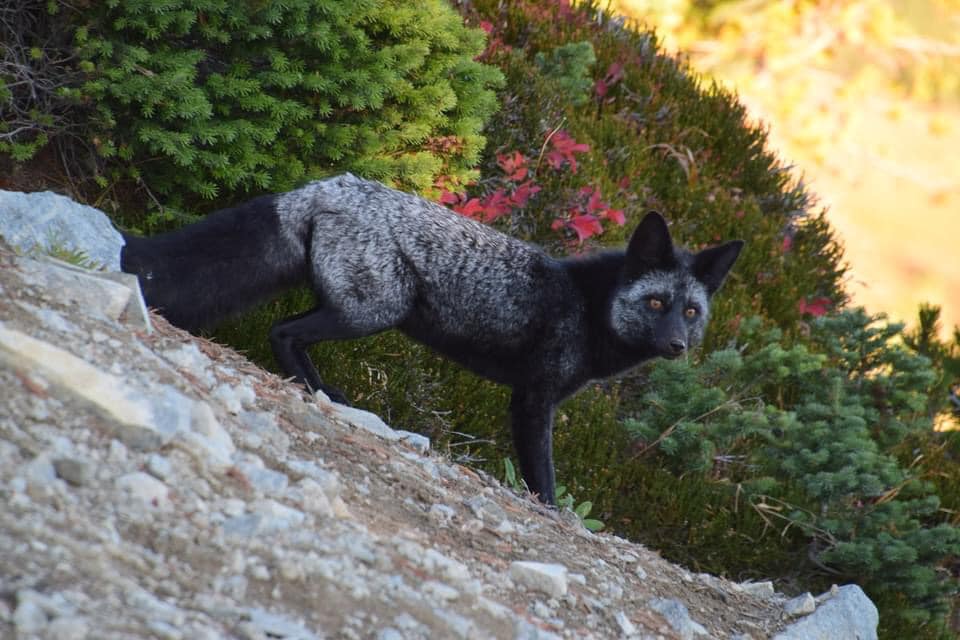
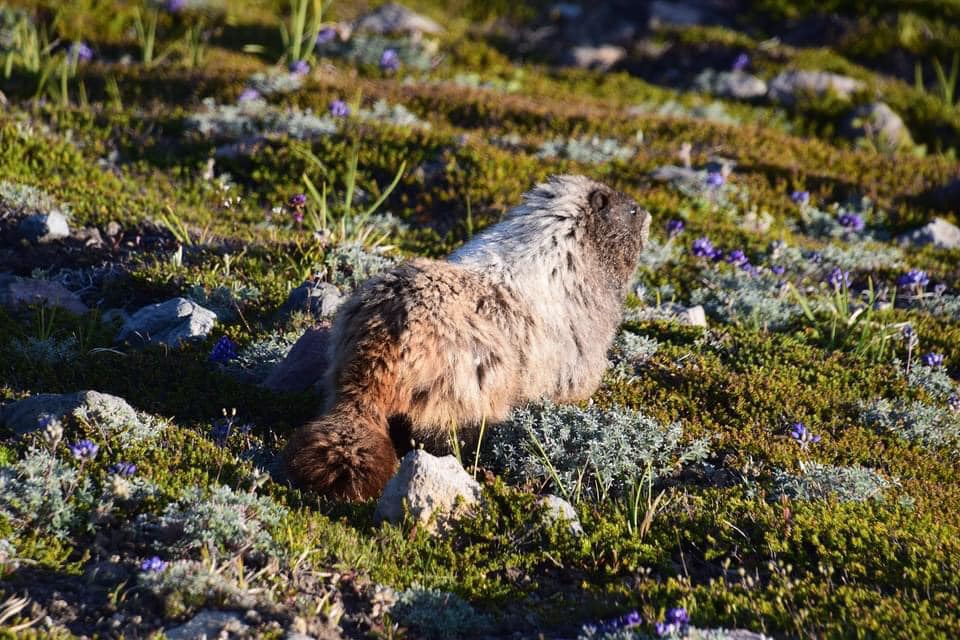
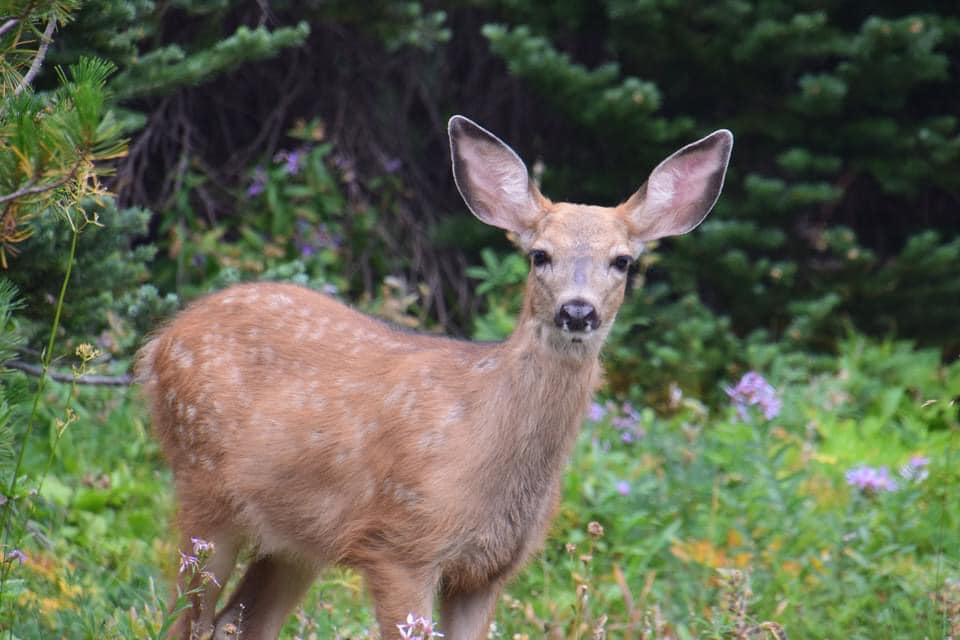
    The seasons and elevation play a big role in determining where you may best find wildlife. In summer, chipmunks, chickarees, ground squirrels, marmots, and pika are commonly seen mammals. Clark's nutcrackers, gray jays, Steller's jays, and ravens are commonly seen birds. Deer are frequently seen, but black bear, elk, and mountain goats are more elusive. Look for elk on the east side of the park in September. The color of black bear may be brown, tan or blond, and to see one is a rare treat. Mountain goats stay close to the high country cliffs.


    Amphibian & Reptile List
    Cascades Frog
    Ensatina
    Long-toed Salamander
    Northern Rubber Boa
    Northern Garter Snake
    Northern Alligator Lizard
    Northwestern Salamander
    Pacific Treefrog
    Pacific Giant Salamander
    Puget Sound Garter Snake
    Red-legged Frog
    Rough-skinned Newt
    Tailed Frog
    Valley Garter Snake
    Van Dyke's Salamander
    Western Red-backed Salamander
    Western Toad


    Mammal List
    Beaver
    Big brown bat
    Black bear
    Black-tailed deer
    Bobcat
    Bushy-tailed woodrat
    Coast mole
    Common or masked shrew
    Cougar
    Coyote
    Deer mouse
    Douglas squirrel
    Elk
    Ermine
    Fisher
    Gapper red-backed mouse
    Golden-mantled ground squirrel
    Hairy-winged myotis
    Heather vole
    Hoary marmot
    Hoary bat
    Long-tailed weasel
    Lump-nosed bat
    Marsh shew
    Marten
    Masked shrew
    Mink
    Mountain beaver
    Mountain goat
    Northern flying squirrel
    Northern pocket gopher
    Oregon meadow mouse
    Pacific jumping mouse
    Pika
    Porcupine
    Raccoon
    Red fox
    Shrew-mole
    Silver-haired bat
    Snowshoe hare, varying hare
    Spotted skunk
    Stripped skunk
    Townsend chipmunk
    Townsend mole
    Townsend meadow mouse
    Trowbridge shrew
    Wandering shrew
    Water shrew
    Yellow pine chipmunk
    Yuma myotis


    Flowers of the Sub-Alpine Meadows
    Alumroot
    Arnica, broadleaf
    Aster, alpine
    Aster, tall leafybract
    Aster, purple
    Beargrass
    Bluebell; harebell
    Bog orchid
    Bramble; blackberry
    Buckwheat, wild
    Buttercup
    Butterwort
    Clinquefoil
    Coltsfoot
    Columbine
    Cow parsnip
    Daisy, mountain; fleabane
    Fescue
    Fireweed
    Fireweed
    Fleabane, gold
    Gentian
    Goldenrod, mountain
    Groundsel; arrowleaf
    Groundsel; senecio; ragwort
    Heather, white
    Heather, red
    Hellebore, false
    Huckleberry; blueberry
    Jacob's ladder
    Jeffrey shootingstar
    Larkspur
    Lily, avalanche
    Lily, glacier
    Lomatium
    Lupine, subalpine
    Lupine
    Marchmarigold
    Meadow, parsley
    Mertensia; merten's bluebells
    Monkeyflower, lewis
    Monkeyflower, yellow
    Monkeyflower, common
    Moss campion
    Mountain Ash
    Mountain bistort; dock
    Paintbrush, magenta
    Paintbrush, scarlet; common
    Partridgefoot
    Pearly-everlasting
    Pedicularis, sickletop

    Pedicularis, coiled beak
    Pedicularis, birdsbeak
    Pedicularis, elephanthead
    Pedicularis, Rainier
    Pedicularis, bracted
    Penstemon, cliff
    Phacelia, silky
    Phlox, spreading
    Rhodondron, white; Cascade azalea
    Sandwort
    Saxifrage, yellowdot
    Saxifrage, Tolmie
    Sedge, black alpine
    Speedwell, Cusick's
    Spirea, rosy
    Springbeauty
    Stonecrop; sedum
    Thistle
    Tigerlily, Columbia
    Valerian, Stika
    Violet, pioneer
    Violet, hook
    Violet, marsh
    Western Anemone; pasqueflower
    Yarrow


    Trees in the Park
    Alaska Yellow-Cedar
    Bigleaf Maple
    Bitter Cherry
    Douglas Maple
    Douglas-Fir
    Engleman Spruce
    Grand Fir
    Lodgepole Pine
    Mountain Hemlock
    Noble Fir
    Pacific Silver Fir
    Pacific Dogwood
    Ponderosa Pine
    Red Alder
    Scouler Willow
    Sitka Spruce
    Subalpine Fir
    Vine Maple
    Western White Pine
    Western Redcedar
    Western Hemlock
    Western Yew
    Whitebark Pine
    Wild Crabapple

    Mount Rainier National Park Links
    Bullet Accessibility
    Bullet Activity & Calendar Page
    Bullet Address, Email & Phone Guide
    Bullet Amphibians & Reptiles List
    Bullet Archeology
    Bullet Backcountry Camping
    Bullet Biking
    Bullet Brochures, Maps, Written Info
    Bullet Camping Guide
    Bullet Climbing
    Bullet Establishment
    Bullet Fees
    Bullet Flower List
    Bullet Glaciers
    Bullet Group Camping
    Bullet Hiking Guide
    Bullet Jobs, SCA, Volunteer Positions
    Bullet Location
    Bullet Lodging Guide
    Bullet Mammal List
    Bullet Map Guide
    Bullet Park Information
    Bullet Permits
    Bullet Pet Information
    Bullet Ranger Programs
    Bullet Search
    Bullet Sights Guide
    Bullet Size & Visitation
    Bullet Stock Usage
    Bullet Travel Guide
    Bullet Tree List
    Bullet Visitors Guide
    Bullet Volcanic Mount Rainier
    Bullet Weather
    Bullet Winter Camping


    Mount Rainier Travel Packets

    Mount Rainier National Park
    Washington National Parks
    Back to National Parks
    Equip yourself for your next National Park adventure by visiting our Outdoor Gear and Equipment Store


    by John William Uhler

    Copyright © 1995 - 2007 Hillclimb Media

    This site is in no way associated with the United States Government, the Department of the Interior or the National Park Service

    Demand Media Network

    Privacy Policy