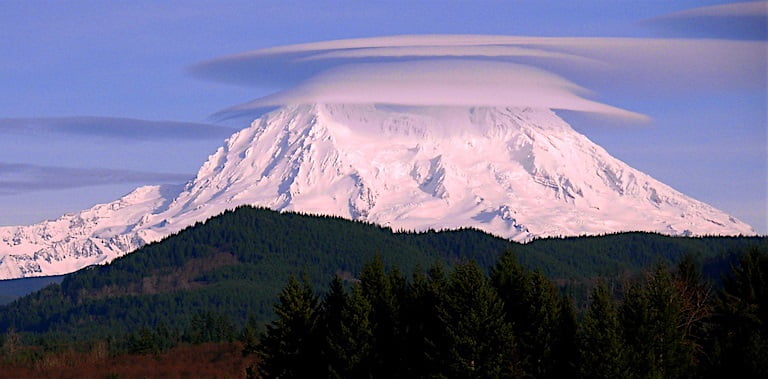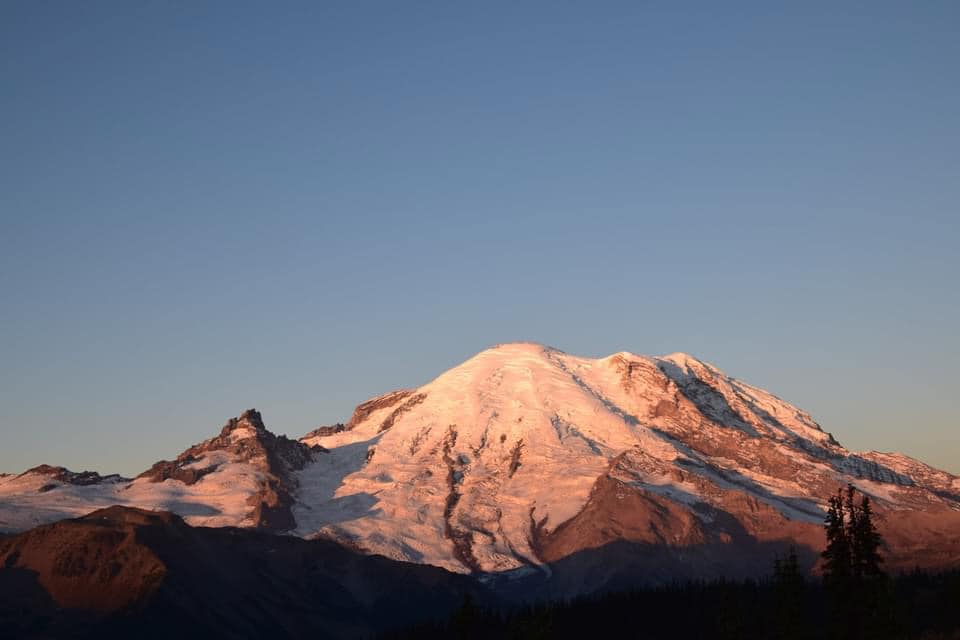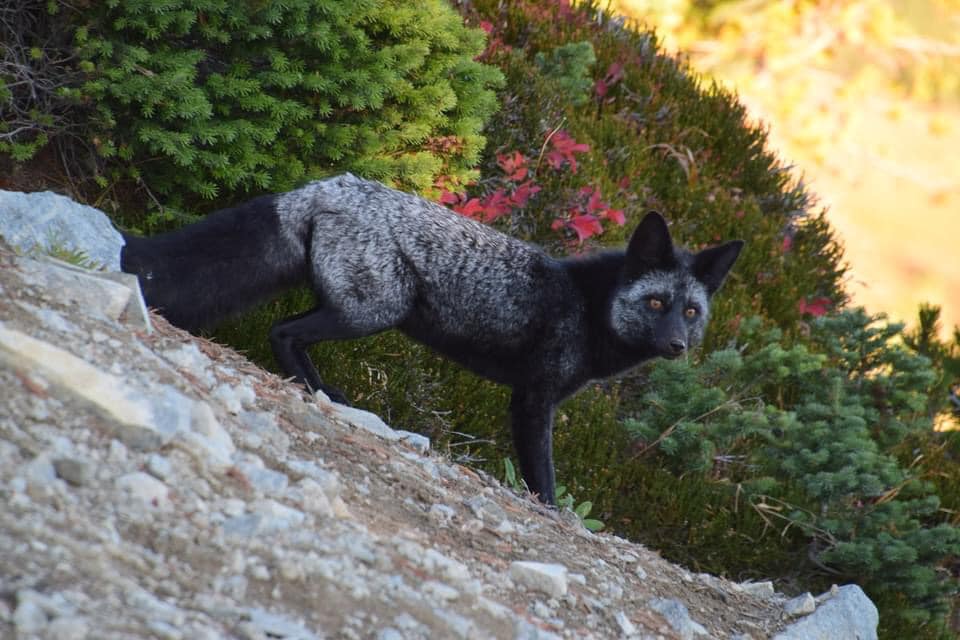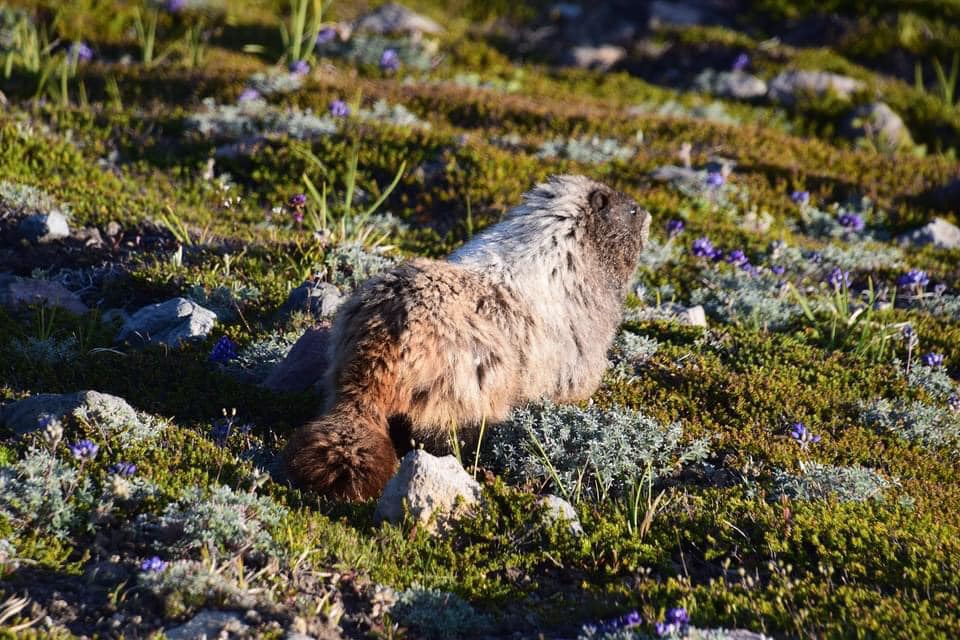
Mount Rainier National Park Hiking Page

Welcome to the Mount Rainier National Park Hiking Page
Here you will find information on hiking trails for day hikes and backcountry exploration, biking paths, and wilderness areas of interest for hikers.
-SPONSORED LINKS-
Mount Rainier Lodging
Mount Rainier Maps
Mount Rainier Hotels
Mount Rainier Camping
Mount Rainier Tours
Mount Rainier Vacations 
Mount Rainier Weather

Sponsored National Park Search

Cub and Sow by John W. Uhler

Hiking Guide
  • Avalanche Danger
  • Basic Hiking Information
  • Climbing
  • Climbing Equipment
  • Climbing Regulations
  • Climbing Routes
  • Human Waste
  • Mountaineering Recovery
  • Self Guiding Trails
  • Winter Climbing

  • 
    

    Basic Hiking Information

    Mount Rainier National Park's over 300 miles of trails are generally accessible mid to late June or early July, depending on snow depths. For the traveler who really wants to see the park, a few days in the wilderness is well worth the time and effort. Even if the weather is foggy or misty, you will discover a world that is beautiful and quiet. The fog can be a blessing, for it may force you to look at the world close by, instead of straining to see the mountain. You can examine closeup the radiant wildflowers that take on a deeper coloration in the mist, or search for signs of wildlife that inhabits the forest floor and the meadows. The 93 mile Wonderland trail completely encircles the mountain, providing perspectives from every angle. A complete circuit takes about 10 to 14 days.

    For nearly 100 years people have hiked and camped in the backcountry of Mount Rainier National Park. In the time since, and even before the dedication of the park in 1899, hiking enthusiasts and park employees have built, maintained, and utilized hundreds of miles of trails around the mountain. By 1973 however, these trails and park natural resources were deteriorating so rapidly that the National Park Service implemented a Backcountry Use and Operation Plan for Mount Rainier. This plan allowed for a permit system to limit the number of users in the backcountry, thus creating a more solitary experience for the campers, while greatly diminishing the impact on the natural environment.


    Self-Guiding Trails
    Trails with trail guides or signs, or trail accessible to wheel chair users
    Trail Length - Miles Description
    Carbon River Roadbed 2.0 The old roadbed of the Carbon River Road makes a fine wheelchair accessible trail through the rainforest. Beyond this point, flood damage has closed the road to vehicular traffic, and is impassable to wheelchairs. This 2 miles is also popular with families with strollers or children on bikes. Travel beyond the closure to Ipsut Creek campground is currently restricted to hikers and bicyclists.
    Kautz Creek Very short Fully accessible trail leads from across the road from the Kautz Creek picnic area to an overlook of the 1947 debris flow.
    Kautz Creek Very short Fully accessible trail leads from across the road from the Kautz Creek picnic area to an overlook of the 1947 debris flow.
    Longmire's Trail of the Shadows 0 .7 round trip Begins just across the park road from the National Park Inn. Half of the trail is passable by wheelchairs with some help. This is an excellent trail for families with children. Strollers can be used with a few short carries required. Signs describe the early homesteading and development of the mineral springs.
    Lower Meadows Varies Active wheelchair users with helpers can reach the lower meadows by way of a steep paved ramp leading from the main trail head at the upper parking lot. Upper trails are very steep--use caution!
    Nisqually Vista Trail Short Beginning just south of the Visitor Center, leads to an overlook above the Nisqually Glacier. Pick up a trail guide from the box at the top of the staircase above the parking lot. Although not accessible to wheelchairs, this trail is used by many families with strollers.
    Ohanapecosh's Grove of the Patriarchs 1.0 round trip Leads to an island in the Ohanapecosh River and a grove of ancient trees. Signs en route explain the forest environment.
    Ohanapecosh Hot Springs 0.5 round trip Begins and ends at the Ohanapecosh Campground, behind the Visitor Center. Signs describe the early use and development of the area.
    Sourdough Ridge 1.0 Begins at the north side of the parking area at Sunrise and makes a loop through the Sunrise Meadows. On clear days, a gentle climb to the ridgetop offers breath-taking views. A booklet explains the fragile environment and some of the life forms found there.


    Climbing

    Mount Rainier, the most heavily glaciated peak in the contiguous United States, offers an exciting challenge to the mountaineer. This 14,411 foot inactive volcano is successfully climbed each year by thousands of people.

    Climbers should be in good physical condition, since an ascent of the mountain involves a vertical elevation gain of more than 9,000 feet over a distance of eight or more miles. Proper physical conditioning can offset the effects of fatigue that often lead to errors in judgement and injuries.

    Weather, snow, and icy conditions can change rapidly and can make the difference between a pleasant and rewarding experience or tragedy. Obtain a current weather forecast before beginning a climb; do not hesitate to turn back if weather conditions deteriorate. Severe winter-like storms on the mountain are not uncommon during the summer months. Contact a Ranger for updated information on weather, forecasts, route conditions, and rockfall/avalanches.

    High Camps on the standard routes are at Camp Muir, 10,000 feet on the south side, and Camp Schurman, 9,500 feet on the east side. Climbers must provide their own shelter. Camp Muir facilities include a Ranger Station, solar pit toilets, and the public shelter, which will accommodate approximately 25 people. Space in the shelter is on a first-come-first-served basis; climbers should be prepared to camp outside if the shelter is full. Camp Schurman facilities consist of a Ranger Station, and a solar pit toilet. Climbers must melt snow for drinking water at both Camp Muir and Camp Schurman. It is advisable to treat or boil water.

    Climbing the mountain is hazardous and should be undertaken only by those well experienced, equipped and fit. All climbers must register with a ranger whether they intend to make a short climb or go to the summit. Climbers are strongly urged to wear hard hats as protection against the hazards of falling rocks and ice.

    Those heading for the top are encouraged to do so with the long-established guide service, Rainier Mountaineering, Inc.

    For information on rates, reservations and equipment, write:

    Rainier Mountaineering, Inc.
    Paradise, WA 98398 (June through September)
    or
    535 Dock Street, Suite 209
    Tacoma, WA 98402 (October through May).

    Climbing Permits

    Anyone planning to travel on glaciers or above 10,000 feet must obtain a climbing permit which also serves as a wilderness permit.

    Permits available at:

    Ten Wilderness Essentials

    Pack the "Ten Essentials" and be prepared for minor injuries, sudden weather changes or delays. Always carry:


    Climbing Regulations

    1. Registration is required by anyone climbing or hiking on glaciers or climbing above the normal high camps such as Camp Muir or Camp Schurman. Checking out after a climb is also required.

    2. A party traveling above high camps or anywhere on glaciers must consist of a minimum of two persons unless prior written permission for a solo climb has been obtained from the Park Superintendent. The Superintendent will consider the following points when reviewing a request for a solo climb:

    Qualifying experience necessary for the route contemplated.
    Number of climbs, including solo climbs, of Mt. Rainier or other glaciated peaks.
    Time of year and time allowed for the climb.
    To request a solo permit, submit the above information to the park superintendent. The mailing address is: Park Superintendent, Tahoma Woods Star Route, Ashford, WA 98304.

    3. A person under 18 years of age must have written permission from their parent or legal guardian before climbing above normal high camps.

    4. Engaging in any business in park areas except in accordance with the provisions of a permit, contract or other written agreement is prohibited, i.e. leading or participating in an unauthorized commercial climb of Mount Rainier is illegal. (Title 36, Code of Federal Regulations)


    Safe Climbing Practices

    Experience -- conditioning climbs on similar glaciated peaks and participation in mountaineering schools are good builders of experience and judgment. Self-rescue and first aid training are helpful.

    Leadership -- the climb leader should have knowledge of the ascent and descent routes and be responsible for the team, which includes keeping the party together.

    Glacier Travel -- it is recommended that climbers be roped together while traveling on glaciers.

    Party Size -- 2 persons minimum required; teams normally consist of 3 people to be adequate to effect a rescue or go for help. Maximum party size is 12 people.


    Recommended Climbing Equipment:

    Knife
    Map and Compass
    Ice Axe
    Crampons
    Boots, lug soled or plastic, with gaitors
    Pack, internal frame
    Sunglasses with side shields
    Goggles
    Sunscreen / lip balm
    Down jacket
    Polypropylene or capilene long underwear (shirt and pants)
    Waterproof clothing
    Mittens / gloves, with liners
    First Aid Kit
    Food (extra food for emergencies)
    Sleeping Bag - comfortable to 10� F
    Ensolite Pad
    Carabiniers, 2 each
    Headlamp and extra batteries
    Prussik Slings(3) or Ascenders
    Chest & Seat Harness
    Helmet

    Team Equipment:

    Rope, 9 or 11 mm
    Ice screws or pickets
    Pulleys (2)
    Stove and Fuel (extra fuel for emergencies)
    Tent
    Wands
    Altimeter

    Additional Equipment for winter or early season climbs:

    Shovel
    Ice / snow saw
    Avalanche transceiver
    Extra clothing
    Skis or showshoes


    Winter Climbing

    Winter storms on Mount Rainier are frequent and severe, with high winds, deep snow, and extremely poor visibility. All parties attempting a winter ascent should be experienced in winter mountaineering, avalanche forecasting and rescue, and be familiar with the intended routes of ascent and descent.


    Human Waste

    Each year thousands of persons attempt a summit climb of Mount Rainier. Another several thousand people day hike to Camp Muir. Each person generates litter and trash, and may use a toilet at a high camp. The removal of litter, trash and human waste from the upper mountain is an expensive operation. Putting trash and waste in crevasses or burying it in the snow will not solve the problem, only delay it and leave it for others. Do not put litter or trash in toilets. It hinders the operation of the toilets and is expensive to remove. Carry out all trash.

    Human waste on the mountain poses health problems as well as spoiling the aesthetic climbing experience. Use the solar composting toilets located at Camp Muir and Camp Schurman. Because of the elevation, there are few micro-organisms to cause decay and decomposition is slow. Besides being unsightly, human waste contaminates the snow which an unsuspecting climber may gather to melt for drinking water. Therefore, all water should be boiled or chemically treated and snow should be gathered from clean areas. At established camps always use toilet facilities.

    "Glacier Toilets" at Emmons and Ingraham Flats are screened areas with barrels for collecting human waste. They are not pit toilets. To use the "Glacier Toilet," defecate on the snow, use the light weight inner bag from the "blue bag" kit like a glove, pick up waste, and deposit it in the barrels provided in the screened area. Avoid using the heavy plastic bag and collect as little snow as possible. This will keep the weight down and reduce the cost of flying the barrels out of the area at the end of the season. There is also a blue bag barrel near the Nisqually Moraine Trail for climbers returning from Camp Hazard. Do not use the barrels for any litter or trash.

    If you must defecate while climbing, move off the route and away from rest areas. Human waste outside toilet locations must be packed out using the special "Blue Bags."

    "Blue Bags" are available at Ranger Stations and at Camp Muir and Camp Schurman. A Blue Bag contain two plastic bags; one clear bag and one blue bag, and twist ties. Use the bags to remove human waste from the upper mountain and deposit them in collection barrels at Camp Muir and Camp Schurman, or the "Glacier Toilets" at Emmons and Ingraham Flats.

    To use the "Blue Bag," defecate on the snow away from the climbing route and rest areas. Collect the waste using the light blue bag like a glove. Turn the blue bag inside-out and secure with the twist ties. Place the blue bag in the clear bag and secure with twist ties. Deposit the bags in the barrels at Camp Muir or Camp Schurman or in the "Glacier Toilets."

    There is no ideal solution to the problem of human waste on the mountain, but if everyone does their part to remove their own waste, we will be able to continue to offer the best possible climbing experience for all.


    Mountaineering Cost Recovery Program

    On 16 Jul 1995, Mount Rainier National Park initiated a Mountaineering Cost Recovery Program. This program consists of a special use fee charged visitors who are climbing above the normal high camps, such as Camp Muir and Camp Schurman, or elsewhere on glaciers. The fee is $15.00 per person per climb or a $25.00 per person annual permit. The program protects the wilderness status of the fragile alpine zones of the upper mountain while providing services to climbers. The program is broken into the following categories:

    Safety and Education: This portion of the program provides such services as: staffing high camps, training personnel, providing climbers with route information and known objective hazards, purchasing search and rescue equipment for emergencies, and maintenance of a preventative search and rescue program.

    Human Waste Collection and Removal: This portion provides toilets at high camps and collection sites at various locations. The toilets and collection sites require routine maintenance, and waste removal by helicopter on a regular basis. Program Administration: This portion includes issuance of climbing permits, advising climbers of known dangers and route conditions, and checking climbing parties out that have returned from climbs.

    Collecting a minimal fee from climbers climbing above the 10,000 foot level will allow Mount Rainier National Park to maintain a program that will support itself without taking from other park resources, and insures users a quality high elevation climbing experience now and in years to come.

    The fee is paid when registering for a climbing permit and can be obtained in person at:

    Paradise Ranger Station (June through September)
    Jackson Visitor Center at Paradise (October through May)
    White River Ranger Station (June through September)
    Carbon River Ranger Station/Wilkeson (year-round)
    Nisqually Entrance Station (year-round)

    Equipment Rental & Sales - Equipment is available for rent and sales in the park at the Paradise Guide House, Ashford, and in the Seattle, Tacoma area.

    Guide Services - Guided one-day climbing instruction, two-day summit climbs and five-day climbing seminars on Mount Rainier are available.


    Common Climbing Routes

    Climbing Routes: Ingraham Glacier and Disappointment Cleaver Routes.
    Elevation gain: 9,000 ft to Columbia Crest.
    Difficulties and Hazards: Grade I or II, strenuous, rock and ice fall, 35 to 40 degree snow and ice slopes altitude.
    Time: Two to three days; 6 to 8 hours from high camp to summit. 3 to 4 hours for descent. Season: May to September.

    The Approach and High Camps

    From the Paradise upper parking lot (5,420 ft) take the Skyline Trail to Pan Point, (6,900 ft) continue to Pebble Creek and follow the Muir Snowfield to Camp Muir at 10,100 ft. Make sure you pick up the "Get your Bearings" brochure which has the compass bearings from Pan Point to Camp Muir. At Camp Muir, there is a ranger station, guide hut, client hut, toilet facilities and public shelter. The public shelter holds 25 people and has an emergency radio inside. It's open all year however the door may become blocked from the inside during snow storms. Camping permits for Muir are issued on a first come, first served basis. There is a limit of 110 people per night.

    From Camp Muir, cross the Cowlitz Glacier to Cathedral Gap (10,640 ft) and continue along the scree ridge (snow covered early season) to the Ingraham Glacier and Ingraham Flats at 11,100 ft. Another climbing camp exists here with a limit of 35 people. There are barrels for depositing blue bags and the Park Service requires that climbers use the "blue bag" system. Another option is to climb through the higher pass in Cathedral Rocks called "Cadaver Gap." Ascend the Cowlitz, skirting the bergschrund to 11,250 ft, arriving just above Ingraham Flats. This variation has an avalanche reputation and is a bit steeper but some climbers prefer it due to the direct nature. From "The Flats," there are two possibilities to reach the crater rim.

    The Routes

    The Ingraham Direct (or Ingraham Glacier route) is preferred by climbers early in the season. From "The Flats" ascend westerly to the Ingraham Ice-fall. The route weaves its way around crevasses and icefalls which vary year to year and week to week until it gets to 12,250 ft (12,660 ft on southerly or left side.) Move rapidly in the lower section; it is not uncommon for ice blocks to cut loose and sweep parts of the route. The route continues to the summit above Gibraltar Rocks or the Disappoint Cleaver, depending on the year. The slope angle decreases a bit (25 degrees +/-) at this point.

    The Disappointment Cleaver route becomes more popular in June and July as the Ingraham Direct melts out and crevasse navigation becomes problematic. Gain the cleaver on a ledge system of crumbling rock 300 ft above Ingraham Flats. Watch out for ice-fall from the Ingraham while accessing the lower cleaver. While on the cleaver, be conscientious of other parties that are moving more rapidly or slowly. This is an extremely dangerous area with a high potential for rock-fall. These conditions intensify with warmer afternoon temperatures. Ascend the rocky/snowy cleaver to 12,300 ft and good rest spot. From here, climb the Emmons or Ingraham Glacier to the summit, negotiating crevasses and unstable snow bridges. Both routes reach the crater rim at 14,150 ft. It's about a 30 to 45 minute round trip walk to the true summit (14,411 ft) and climber register.

    The Descent

    Descend the route you climbed. Remember to move quickly in dangerous areas and plan your rest breaks in safe locations. The afternoon heat weakens the snow bridges and intensifies the rock-fall hazard.


    Climbing Routes: Emmons Winthrop Glacier Route.
    Elevation gain: 10,000 ft to Columbia Crest.
    Difficulties and Hazards: Grade I or II, strenuous, 30 to 40 degree snow and ice slopes, glacier travel, altitude.
    Time: Two to three days. Seven to nine hours from Camp Schurman to summit. Three to four hours for descent. Season: Mid May to September.

    The Approach and High Camps

    Start at the White River Campground (4,400 ft) and take the Glacier Basin trail (3.3 miles) to Glacier Basin Camp at 6,000 ft.From the basin, follow the climbers' path up the moraine to the snout of the Inter Glacier at 6,800 ft. Ascend the Inter Glacier, negotiating crevasses as needed to Camp Curtis at 9,000 ft on Ruth Ridge, which is on your left hand (southerly) side. A small climbing camp exists here. From Camp Curtis, descend 100 feet to the Emmons Glacier on a climbers path of loose rock. Once on the Emmons, continue to climb the glacier to Camp Schurman (9,500 ft.) Camp Schurman has toilet facilities, blue bag barrels and a ranger hut with emergency radio. There is a limit of 48 people, first come first served. Another camp, Emmons Flats, is 300 feet above Schurman. Emmons Flats has a 24 person limit and is entirely on the glacier. If you're camping at the flats, you must use blue bags and deposit them in the barrels provided.

    The Routes

    From Emmons Flats, ascend the glacier to "the Corridor," a prominent glacial feature that rises higher than the rest of the Emmons. Access the Corridor from 10,000 ft to 10,300 ft depending on the year. The Corridor tops out at 11,200 ft. At this point, the route becomes steeper (30 to 40 degrees) and will take a variety of directions depending on the year, glacier movement and snowfall. It is not uncommon to traverse over on the Winthrop and ascend its shoulder to the Bergschrund. This crevasse is the usually the highest on the mountain and may involve down climbing and belays to cross. Frequently it can be circumnavigated however there have been times when climbers traversed around to the Disappointment Clever route. Access the crater rim at 14,250 ft. It's a short southwesterly walk from here to the true summit and climber register.

    The Descent

    Descend the route you climbed. Remember to move quickly in dangerous areas and rest in safe locations. The afternoon sun weakens snow-bridges and makes crossings more hazardous. Also make sure to drop off used blue bags in the barrels at Emmons Flats or Camp Schurman.


    Climbing Routes: Liberty Ridge.
    Elevation gain: 10,500 feet to Liberty Cap (14,112).
    Difficulties & Hazards: Grade III/IV extremely strenuous, 50� ice slopes, rock & ice fall, glacier travel & high alt
    Time: 2 to 4 days. Most parties need 2 days to reach Thumb Rock, 5 to 10 hours from high camp to summit, 3 hours from summit to Camp Schurman.
    Season: May to Mid July.

    The Approach and High Camps

    Start at White River Campground (4,400 feet) and follow the Glacier Basin trail (3.3 miles) to Glacier Basin camp at 6,000 feet. From the basin, follow the climbers path up the moraine to the snout of the Inter Glacier, (6,800 feet) turn west and ascend the scree slope to the St. Elmo's Pass (7,400 feet and possible bivy.) Drop down to the Winthrop Glacier at 7,200 feet and cross to the lower Curtis Ridge. Traverse this broad based ridge to access the Carbon Glacier and climbing route.

    The Routes

    Access the Carbon Glacier from lower Curtis Ridge at 7,200 feet. Ascend the Carbon (which becomes heavily crevassed later in the season) to the base of Liberty Ridge. Most parties gain the ridge on the Willis Wall side (eastern) but seasonal conditions may dictate otherwise. Traverse to the west side of the ridge and ascend moderate snow and scree slopes (30 to 40 degrees) to Thumb Rock (10,760 ft.) A saddle just beyond this prominent rock formation provides an excellent choice for high camp however the area is small and could possibly be crowded on a busy weekends.

    From Thumb Rock, take the right or left gully (depending on conditions) out of camp and ascend steeper snow and ice slopes to the Black Pyramid at 12,000 feet. Continue left out onto the face (40 to 50 degrees and may be very icy) and climb until it joins the Liberty Ice Cap Glacier. The slope angle decreases here however the bergshrund near Liberty Cap may require vertical ice climbing. Once on Liberty Cap (14,112) cross the col and ascend gentle slopes to Columbia Crest (14,411.)

    The Descent

    Descend the Emmons/Winthrop Glacier route to Camp Schurman at 9,500 feet. From Camp Schurman either climb over Steamboat Prow (fourth class loose rock) to the top of the Inter Glacier or descend the Emmons to Camp Curtis, carry over the ridge at 9,000 feet and continue descent on Inter Glacier to the moraine. Hike out Glacier Basin trail.


    AVALANCHE DANGER

    An avalanche occurs when a layer of snow looses its grip on a slope and slides downhill. Although avalanches occur by the thousands every winter in mountainous terrain, almost all avalanches involving people are triggered by people. The more time you are engaged in winter activities, the greater your chances of being caught by an avalanche.

    At Mount Rainier, the avalanche danger is forecast daily for the Paradise area. Familiarize yourself with these danger levels mean. Learn the terrain and weather factors that influence avalanche danger. Put that knowledge to good use when selecting the route you will travel, or even if you will travel. Knowledge can help you avoid being caught by a snow avalanche and will help you survive if you are caught.

    What is the danger level forecast for Paradise (6500 feet and below)?
    What does the danger level indicate about snow conditions?
    What should skiers, snowboarders, and others know before leaving?

    Low

    The snow is generally stable with isolated areas of instability.
    Natural avalanches are very unlikely.
    Human triggered avalanches are unlikely.
    Travel is generally safe. Normal caution is advised.

    Moderate

    Unstable snow slabs are possible on steep terrain.
    Natural avalanches are unlikely.
    Human triggered avalanches are possible.
    Use caution in steeper terrain on certain slope aspects.

    Considerable

    Unstable snow slabs are probable on steep terrain.
    Natural avalanches are possible.
    Human triggered avalanches are probable.
    Be increasingly cautious in steeper terrain.

    High

    Unstable snow slabs are likely on a variety of aspects and slope angles.
    Natural and human triggered avalanches are likely.
    Travel is not recommended.
    Safest travel will be on windward ridges and low angle slopes without steeper terrain above.

    Extreme

    Extremely unstable snow slabs certain on most aspects and slope angles.
    Large destructive avalanches possible.
    Widespread natural or human triggered avalanches are certain.
    Travel in avalanche terrain should be avoided and travel confined to low angle terrain well away from avalanche path run-outs.

    Route Selection

    The safest routes are on ridgetops and slightly on the windward side of ridgelines, away from cornices.
    If you can't travel on ridges, the next safest routes are out in the valleys, far from the bottom of slopes.

    Weather Factors

    Storms: About 80% of all snow avalanches occur during, and shortly after, storms.

    Rate of snowfall: Snow falling at the rate of 1" per hour, or more, rapidly increases avalanche danger.

    Temperature: Storms starting with low temperatures and dry snow, followed by rising temperatures and wetter snow, are more likely to cause avalanches.

    Wet snow: Rainstorms or spring weather with warm winds and cloudy nights can warm the snow cover resulting in wet snow avalanches. Wet snow avalanches are more likely on south slopes and under exposed rock.

    Terrain Factors

    Ground cover: Large rocks, trees and heavy shrubs help anchor snow.

    Slope profile: Dangerous slab avalanches are more likely to occur on convex slopes.

    Slope aspect: Leeward slopes are dangerous because windblown snows add depth and create unconsolidated slabs. South facing slopes are most dangerous during springtime.

    Slope steepness: Snow avalanches are most common on slopes of 30 to 45 degrees.


    Avalanche Survival

    Treat avalanche danger with utmost caution. Taking a route around an avalanche track is advisable under any circumstance, but becomes essential during the more hazardous conditions. Consider the value of having everyone in your group wear an avalanche transceiver (an electronic device whose beeps help locate buried victims) and be familiar with its use. A readily available shovel and avalanche probe can also allow you, as a survivor, to rescue a victim.

    If you are caught in an avalanche:

    Discard all equipment.
    Make swimming motions. Try to stay on top of the snow and work your way to the side of the avalanche.
    Before coming to a stop, get your hands in front of your face and try to make an air space in the snow.
    Try to remain calm.

    If you are the survivor:

    Mark the place where you last saw the victim.
    Search directly down slope below the last seen point. If the victim is not on the surface, scuff or probe the snow with a ski pole or stick.
    Keep searching! Do not leave to go for help unless help is only a few minutes away. Only 50% of victims survive after one hour of burial.
    Report all incidents to a ranger.

    Reference used in preparing this information: Snow Avalanches, Signpost Bulletin No. 1, Signpost Magazine, Lynwood, WA 98036 (from material originally prepared by the U.S. Forest Service); Avalanche Hazard Evaluation Field Checklist and U.S. Avalanche Danger Descriptors by Doug Feeler and Jill Fredston, Alaska Mountain Safety Center, Inc.

    Information provided by the National Park Service.


    Mount Rainier Travel Packets

    Mount Rainier National Park Links
    Bullet Accessibility
    Bullet Activity & Calendar Page
    Bullet Address, Email & Phone Guide
    Bullet Amphibians & Reptiles List
    Bullet Archeology
    Bullet Backcountry Camping
    Bullet Biking
    Bullet Brochures, Maps, Written Info
    Bullet Camping Guide
    Bullet Climbing
    Bullet Establishment
    Bullet Fees
    Bullet Flower List
    Bullet Glaciers
    Bullet Group Camping
    Bullet Hiking Guide
    Bullet Jobs, SCA, Volunteer Positions
    Bullet Location
    Bullet Lodging Guide
    Bullet Mammal List
    Bullet Map Guide
    Bullet Park Information
    Bullet Permits
    Bullet Pet Information
    Bullet Ranger Programs
    Bullet Search
    Bullet Sights Guide
    Bullet Size & Visitation
    Bullet Stock Usage
    Bullet Travel Guide
    Bullet Tree List
    Bullet Visitors Guide
    Bullet Volcanic Mount Rainier
    Bullet Weather
    Bullet Winter Camping

    Mount Rainier National Park
    Washington National Parks
    Back to National Parks
    Equip yourself for your next National Park adventure by visiting our Outdoor Gear and Equipment Store


    by John William Uhler

    Copyright © 1995 - 2007 Hillclimb Media

    This site is in no way associated with the United States Government, the Department of the Interior or the National Park Service

    Demand Media Network

    Privacy Policy